
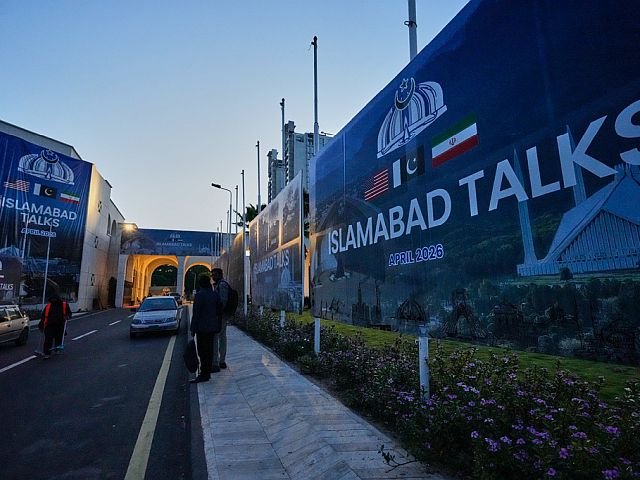
Vance reported that the negotiations lasted 21 hours. At the press conference, he noted:
“We had a series of substantive discussions with the Iranians. That’s the good news. The bad news is that we did not reach an agreement.”
According to him, a key issue remains Iran’s commitments to prevent the development of nuclear weapons, both in the short and long term.
“At this moment, we have not seen anything like that. I hope it will happen in the future,”
the US Vice President added.
Vance also mentioned that during the negotiations he was in contact with senior military and political leaders, including Admiral Brad Cooper, Pete Hegseth, and Marco Rubio, as well as speaking with Donald Trump.
After the press conference, Vance flew from Pakistan to Washington on a Boeing C-32A. It was expected that the US-Iran negotiations in Islamabad would continue on April 12, but according to Iranian sources, that will not happen. The Iranian agency Tasnim reported that “Iran is not in a hurry to negotiate”.
According to sources, the duration of the negotiations was 24-25 hours. One report states that
“as long as the US does not agree to a reasonable deal, the situation in the Strait of Hormuz will not change.”
The Iranian side claims that attempts by the US to achieve its objectives, which were not realized during the war with Iran, have “been nullified”.
“Iranian negotiators proposed a number of initiatives to push the American side towards a common position on the agreement. However, the excessive demands of the US hindered the emergence of realism and rationality,”
the report states.
In light of these events, Israeli media report an effective failure of the US-Iran negotiations. Pakistan urged both sides to continue adhering to the two-week ceasefire agreement. Pakistan’s Foreign Minister Ishaq Dar stated:
“It is crucial for the parties to continue fulfilling their ceasefire commitments. Pakistan will continue to play its role in facilitating dialogue between the Islamic Republic of Iran and the United States in the coming days.”
The negotiations are taking place against the backdrop of a fragile two-week truce and aim to solidify the ceasefire while discussing key issues, including Iran’s nuclear program and the situation in the Strait of Hormuz. Tehran insists on the unfreezing of assets, compensation for strikes, and broader regional agreements, while the US emphasizes freedom of navigation in the Strait of Hormuz and limiting Iran’s military capabilities.

Комментарии 0