
Strike Against the Holocaust
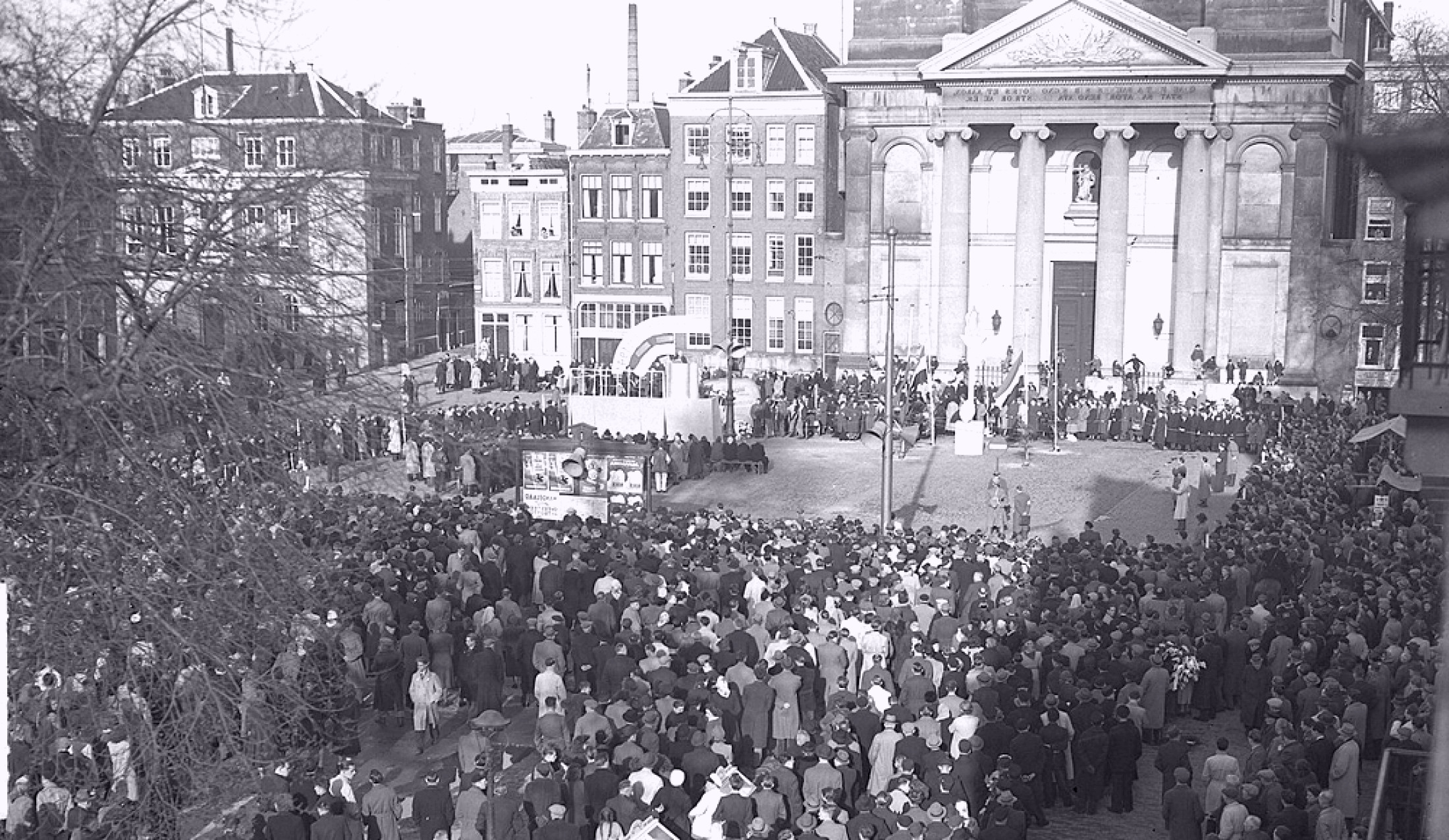
85 years ago, an event in the Dutch capital demonstrated to the Nazis that their intentions for the “final solution to the Jewish question” were met with disgust by the local population. The residents of Amsterdam organized a strike in defense of the Jews.
The fascist forces swiftly occupied the Netherlands: on May 10, 1940, they crossed the border of the neutral country, and by May 14, the Dutch leadership, realizing the futility of further resistance, began negotiations for surrender and ordered the troops to cease fire. Germany established the Reichskommissariat “Netherlands,” headed by Arthur Seyss-Inquart, who had previously distinguished himself during the Anschluss of Austria. Local National Socialists actively supported the fascist regime. Jews and those the Nazis considered “half-breeds” were required to wear yellow stars on their clothing, and they were excluded from public service, media, and the management of industrial enterprises. Starting in 1941, local authorities began mass registration of Jews, and in Amsterdam, where there was no ghetto, its establishment was only a matter of time. The first was “Jewish Street”. Jodenbreestraat was surrounded by barbed wire and fences.
To avoid public outrage, the Nazi authorities sought formal pretexts for the deportation of Dutch Jews. They encouraged their militants to raid areas where the Jewish community lived, hoping for clashes and casualties among the “Resistance Department,” as they called their agents. This occurred on February 11, 1941, when a group of 40 people came to “have fun” in Jodenbuurt, the Jewish quarter of Amsterdam. They were met by Jewish self-defense members, and a serious brawl ensued. Collaborators began to flee. One participant, Hendrik Koot, sustained severe injuries and did not survive. A police report modestly noted:
“the only blow to the back of the head with a blunt heavy object (the butt of an axe or a truncheon).”
Nazi newspapers launched a defamation campaign, claiming that
“a Jew attacked an unfortunate patriot, sunk his teeth into him, and sucked his blood!”
The funeral turned into an act of intimidation: 2,000 people with flags marched to the cemetery to military marches, giving speeches and pledging revenge, while the grave was “adorned” with SS symbols.
The Nazis intensified the blockade of the neighborhood, set up checkpoints, and created a judenrat for administration. Raids were conducted in search of Jewish self-defense members.
On February 22-23, the Nazis organized a mass pogrom and roundup, resulting in the arrest of 425 young Jews aged 20 to 35, who were sent to the Kamp-Surle camp.
Forces unwilling to reconcile with the Nazis decided to respond with a strike. Communists, forced underground, prepared leaflets overnight, calling on citizens to protest against the violence against Jews and forced labor in Germany. The manifesto for the strike was drafted by Saúl de Grot and his associate Lou Jansen. The text urged not to allow the occupiers’ plans to establish a puppet government.
“Organize a strike of protest at all enterprises! Fight unanimously against terror! Organize self-defense at workplaces and in your neighborhoods!”
On February 24, a rally took place where leaders of the Amsterdam communists — road worker Willem Johannes Kraan and cleaner Piet Nak — spoke.
“Strike, strike!”
— the crowd roared. The next day, trams, educational institutions, ports, and most factories halted operations. By noon, workers from almost all enterprises, civil servants, and shopkeepers joined the strike. The streets of Amsterdam were filled with people, and activists from leftist parties distributed leaflets calling for the continuation of the strike.
On the same day, similar actions occurred in other cities in North Holland and Utrecht. On February 26, the strikes continued, with over 300,000 Dutch participating. The Nazis declared a state of emergency, and police and troops began firing on demonstrators. As a result, 9 people were killed, and 24 were severely injured. Hundreds of communists were arrested, and four were executed. The city was obliged to pay 15 million guilders in compensation. The state of emergency was lifted only on March 8, 1941.
Despite the fact that the February strike did not achieve its goals, it became the first mass act of resistance in Nazi-occupied countries of Europe. The open protest of the citizens of the Netherlands marked the beginning of organized underground struggle against the regime.
The strike in Amsterdam remained the only mass protest by Europeans against Nazi policies towards Jews, aside from the demonstration on Rose Street in Berlin.
In 1952, Amsterdam commemorated the February strike with a statue of a dock worker, symbolizing the people’s resistance. Every year on February 25, a memorial march takes place past this monument.
P.S.
Of Hendrik Koot’s eight children, only the two older sons went into the merchant navy, while the others became volunteer SS members.
On the street where the Nazis began the creation of the ghetto, the Rembrandt house-museum had already been operating for 30 years by 1941.
Of the 425 arrested during the February roundups in the ghetto, only two managed to survive after being sent to Buchenwald and Mauthausen.
The strike forced the Nazis to abandon their plans for a puppet government led by local Nazi Mussert.
By the decision of the Nuremberg Tribunal, Arthur Seyss-Inquart was recognized as a war criminal and executed for crimes against humanity.

Комментарии 0